

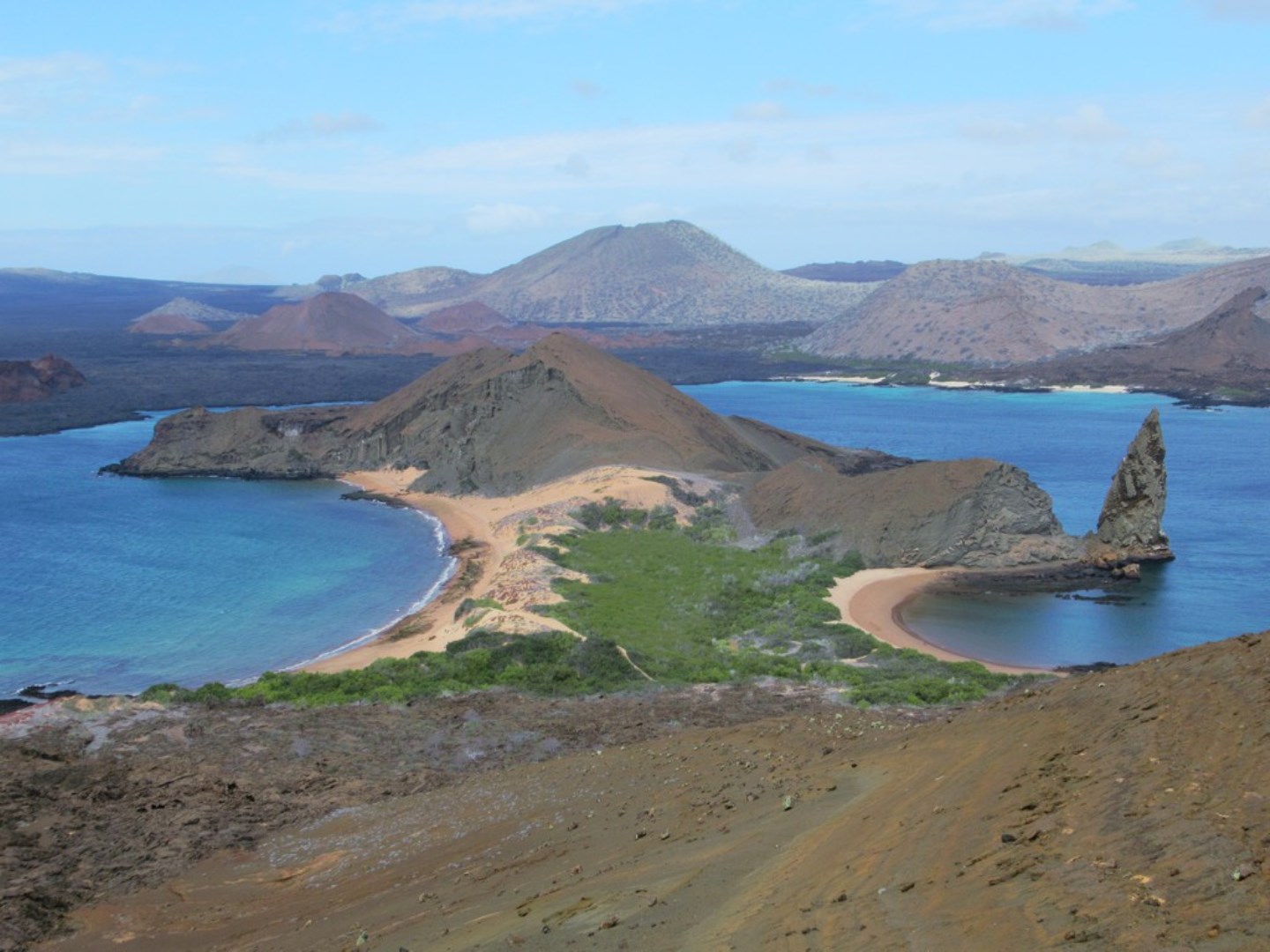
Sullivan Bay, located on the eastern shore of Santiago Island in Ecuador’s Galápagos archipelago, offers a landscape that feels almost otherworldly at first glance. Instead of lush greenery, visitors are greeted by wide stretches of hardened lava. These black, rippled fields tell a story written in fire, where molten rock once flowed freely before cooling into intricate patterns that can still be traced today. Walking here is less about reaching a destination and more about witnessing the raw beginnings of land itself.
One of the most fascinating aspects of Sullivan Bay is how life slowly returns to what once seemed lifeless. Small plants begin to appear in cracks within the lava, showing how ecosystems take hold over time. These early settlers of the plant world, such as low-growing species that cling to tiny pockets of soil, offer a rare chance to see nature in its earliest stages of recovery. It is a quiet process, but one that reveals how the Galápagos continues to evolve even today.
Though remote, Sullivan Bay has become a highlight for guided Galápagos visits, particularly for those curious about how islands are formed. Unlike other stops in the region that focus heavily on wildlife, this destination draws attention to the forces that shaped the entire archipelago. Visitors leave not only with photographs of dramatic terrain, but with a deeper understanding of how new land emerges and how life slowly follows.}